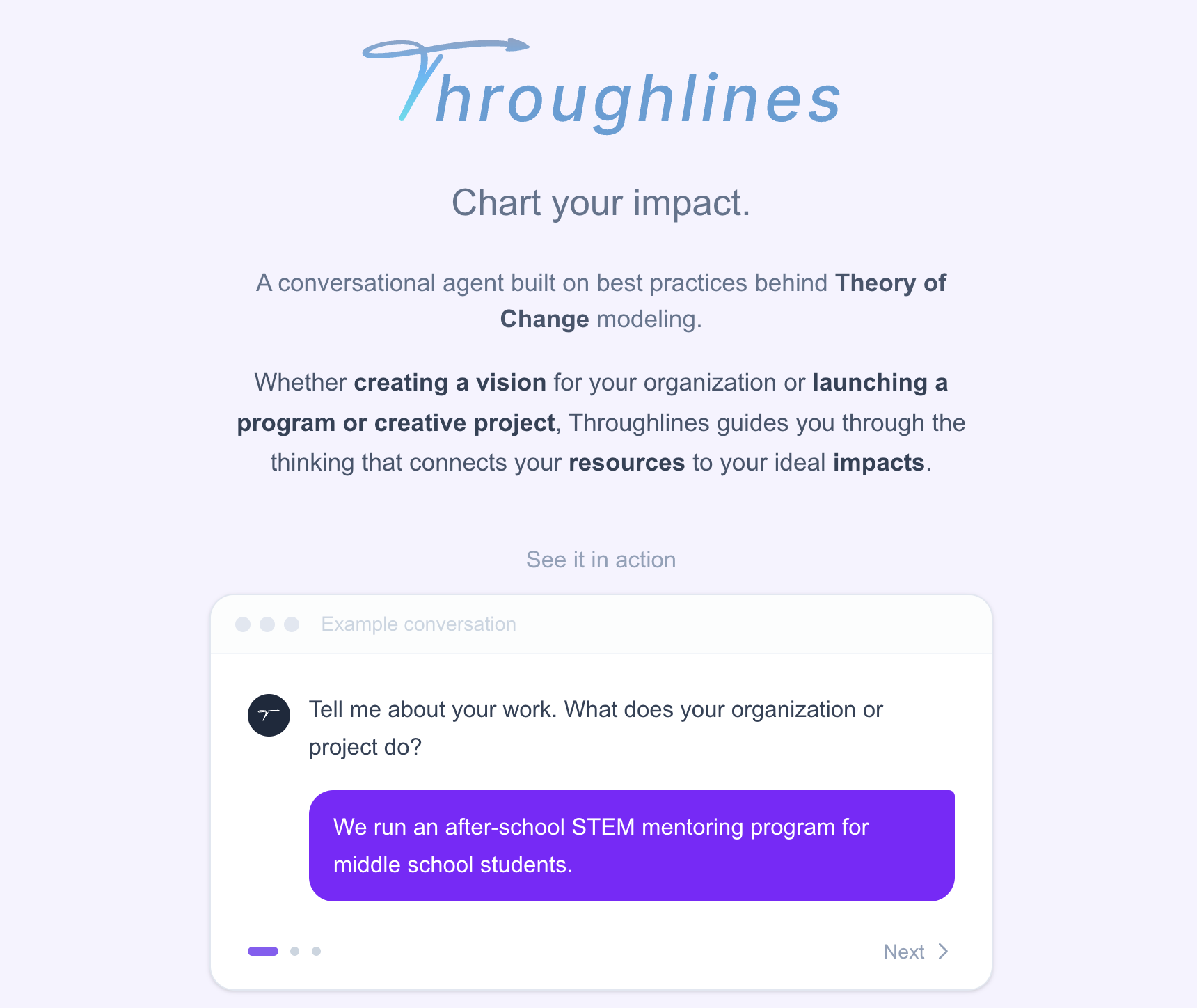
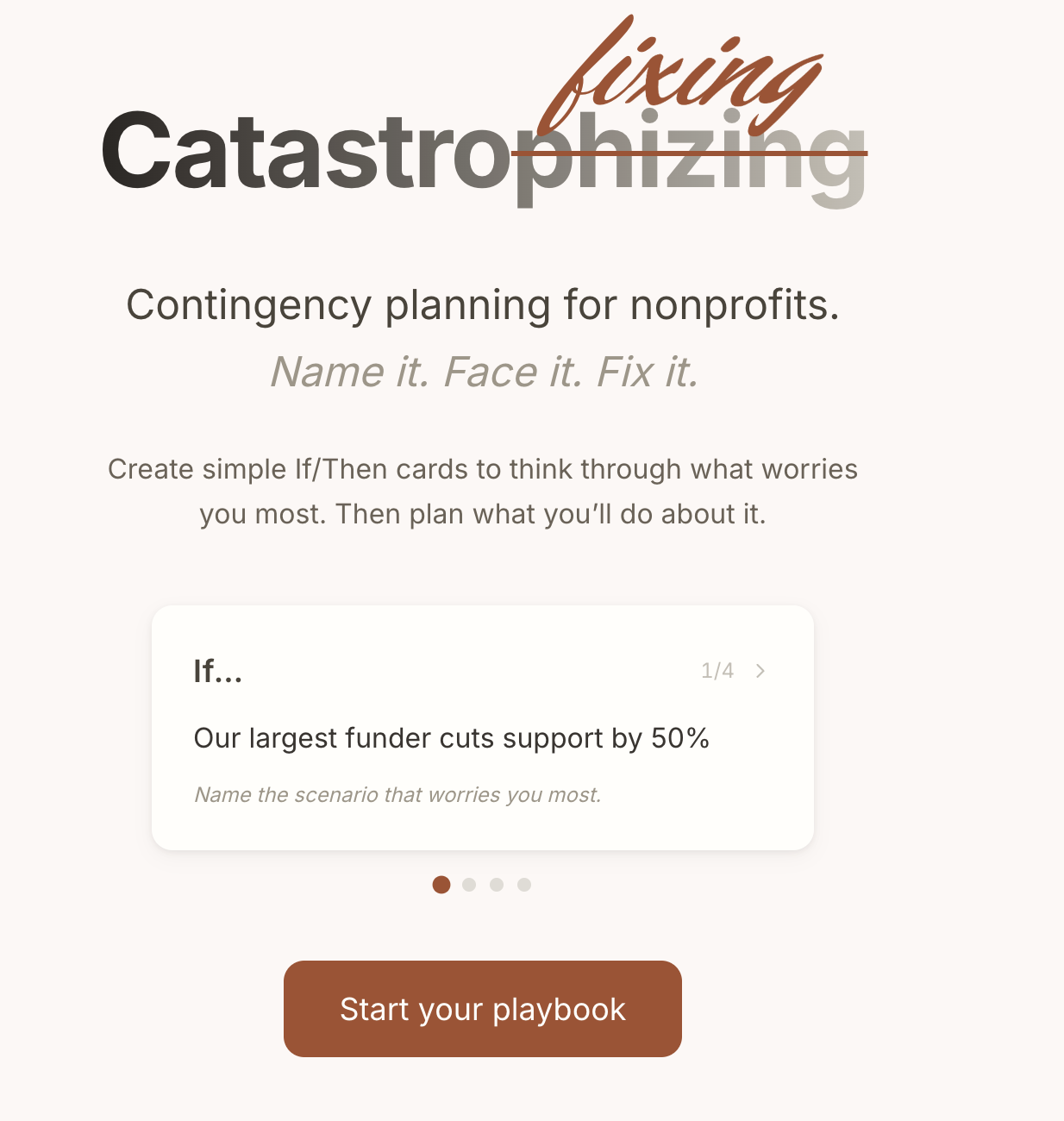
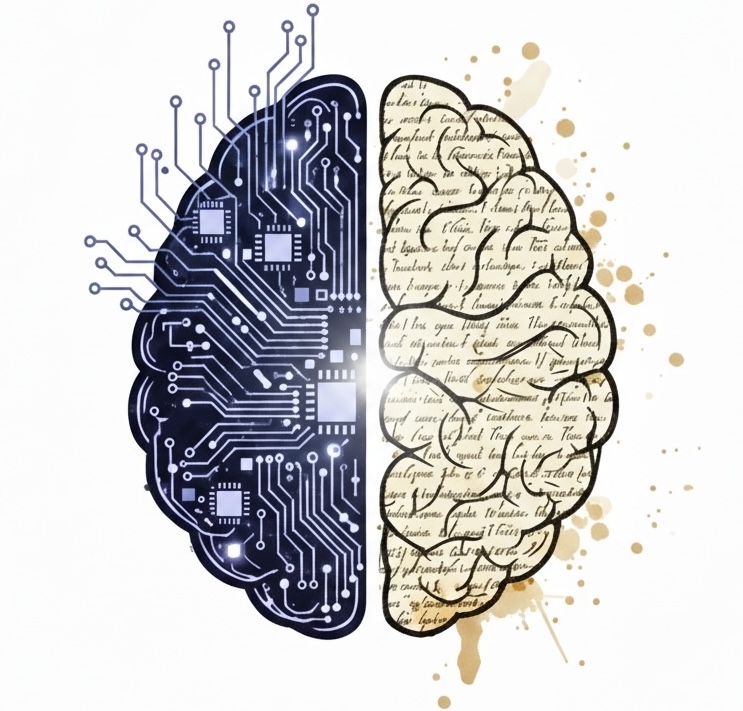
I’m not an AI evangelist. I’m a maker who never learned to code (programming languages still look like magical incantations to me), and when I started playing around with AI, something unlocked: I could just build stuff. A theory of change builder. A contingency planning app. I learned by building, and I think that’s how most of this sector will learn too.
It matters because people who work in nonprofits are over capacity and wearing too many hats. Used thoughtfully, AI can take on a lot of the busywork, which means getting time back for the things that actually feed the mission — the relational parts of the work that are so important and so hard to fit in.
I also believe this technology is too important to leave in the hands of technologists alone. We’ve seen what that looks like with social media. We need artists, humanists, and social-service providers steering where this is going — deciding what AI is for, where its guardrails belong, and whose interests it serves. That only happens when mission-driven people engage with it directly.
Before all this, I spent close to a decade as a researcher and strategist for cultural and mission-driven organizations across the country, which taught me how nonprofits actually run: their workflows, their bottlenecks, the dynamics that shape what’s possible. Here’s more on my background.
Now I put all of it to work, on my own and with my SCL CPTL co-founder, Devon VanHouten Maldonado. Here’s what that looks like.